Our oats grow in one valley.
Every oat in every carton comes from one farm family on the Columbia Basin border. One grain, one source, every batch.
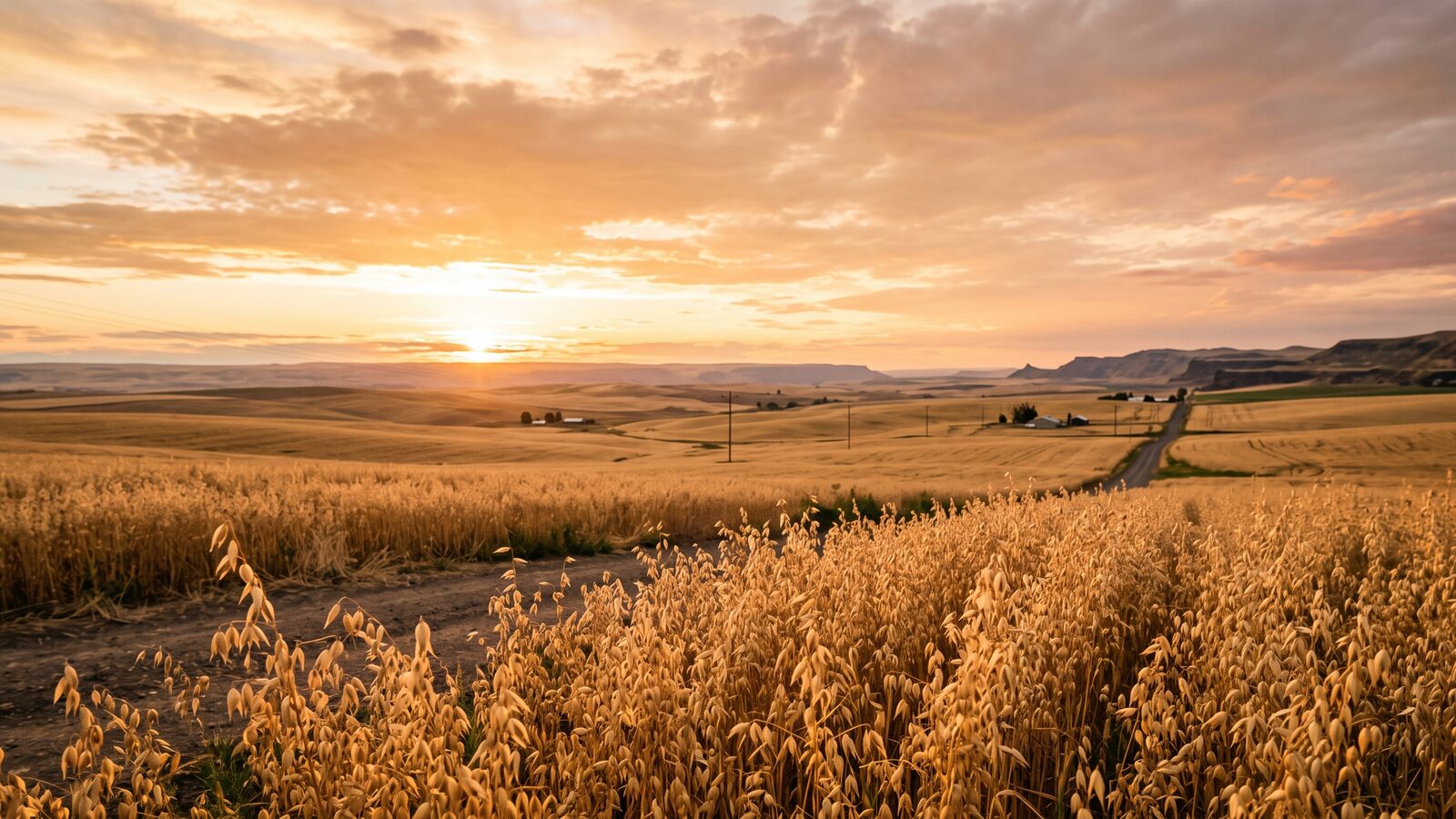
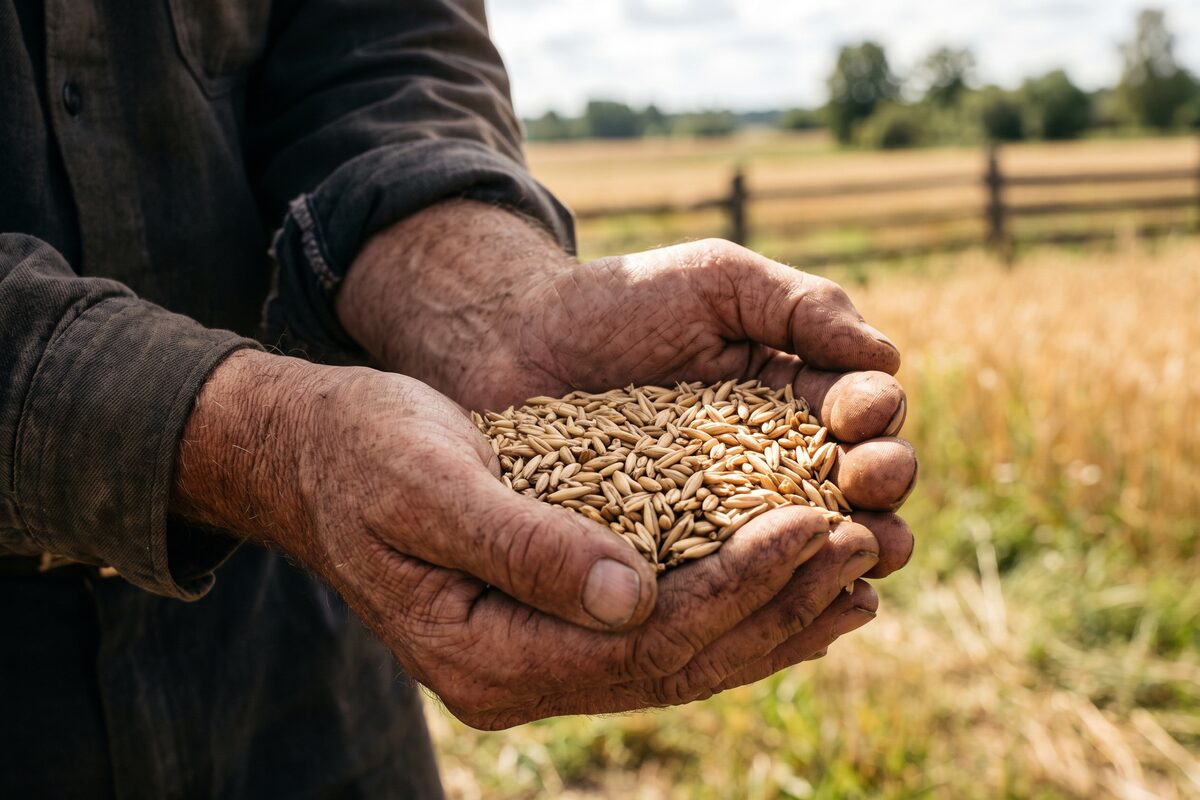
One farm. The Hargroves.
The Hargrove family has farmed the same stretch of the Columbia Basin, on the eastern Oregon and Washington border, for three generations. We buy from them exclusively so we know exactly how our oats are grown.
Single-origin oats are not a marketing line for us. They are how we keep the flavor, the starch content, and the way the milk steams consistent carton to carton. When the oat changes, the milk changes. So the oat does not change.
The Hargroves grow one variety, rotated on dryland plots not treated with synthetic pesticides since 2003. We mill within a week of harvest and press within days of milling. Short supply chain, low variance, consistent cup.
From field to carton.
Four steps. No shortcuts in any of them.
Hargrove family farm, Columbia Basin. One variety, in rotation on dryland plots since 2003.
Stone-milled at a small regional mill in eastern Oregon, delivered to our creamery within a week of milling.
Blended in 200-liter batches at our Portland creamery with filtered water and cold-pressed sunflower oil.
Packed same-day into paper-based cartons, sealed, and cold-stored. No preservatives added.
What we hold to.
The carton, plainly.
We use a paper-based carton with a plant-based cap. That is the short version.
The carton body is a paperboard sleeve with a thin food-grade inner lining. To recycle it: rinse it out, open the top, and flatten it. Most US curbside paper-recycling programs accept this format. Check the label or your local program if you are unsure.
The cap is plant-based PLA. Composting programs that accept PLA can take it. We are honest that the cap is an imperfect solution and are looking at alternatives.
The outer sleeve is uncoated paperboard and goes straight into paper recycling.
Read how we started.
The 2018 commissary kitchen, the shop cat, and why we moved into a creamery on SE Bybee.